In a moment when conversations about immigration, policing, public safety, and gun access dominate our national dialogue, we need to reconsider what we mean by courage. We often celebrate speed, intensity, and force. But those qualities alone do not create safety. They amplify whatever nervous system is holding power.
Several of you noted that quick action in the bus story I shared the other day might have actually prevented harm. Even though it turned out to be unnecessary, it could have mattered. Thank you for pointing that out. You are right. Sometimes decisive action does matter.
But my own experience and observations seem to indicate I’m more in danger of acting too quickly than the other way around.
The first time I took students to Malawi on a study abroad, I stood in an open-air market and felt completely overwhelmed. Vendors pressed in around the young women traveling with us. It felt aggressive to me. My body went into alert mode. My inner mama bear rose, and I stepped in between them to protect the girls.
Years later, after many return trips and real relationships with some of those same vendors, I understood something important. What felt to me like threatening behavior was simply commerce expressed in a different cultural rhythm. I was not wrong to want to protect. I was incomplete in my understanding of what was happening.
Protective instinct can be powerful and important. Without context, though, it can misfire. With experience, cultural literacy, and reflection, that same instinct can be refined so that it serves rather than escalates.
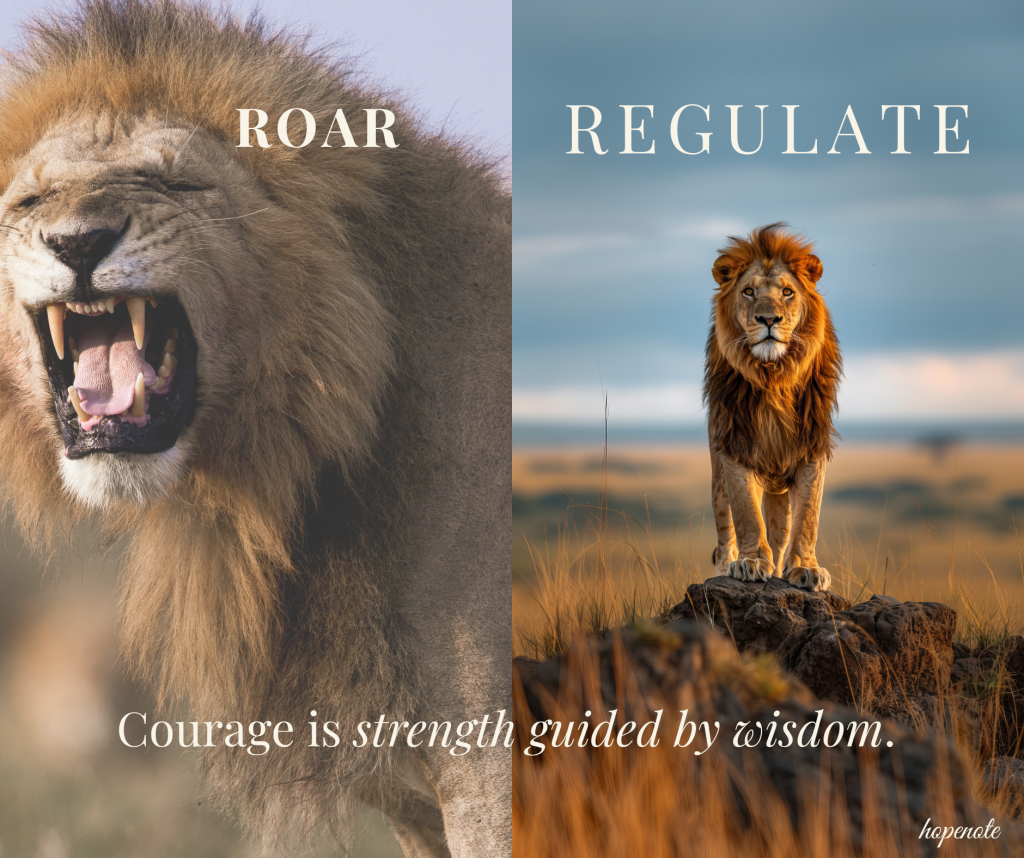
We are very good at teaching people to ROAR.
We are much less practiced at teaching them to regulate.
We celebrate intensity in our culture. We reward dominant energy. We pump up adrenaline and call it courage. But courage is not about domination. Courage is strength guided by wisdom. It is the capacity to act decisively without losing discernment. If we have the beat (the pause), we need to take that beat before we act.
Whenever we place young people in protective roles, whether as parents, teachers, coaches, officers, or soldiers, we owe them more than adrenaline.
We owe them discernment.
We owe them cultural literacy.
We owe them trauma awareness.
We owe them practice in reading situations well before reacting.
Yes, authority amplifies whatever nervous system is holding it. In a time when fear runs high, when immigration and policing dominate our headlines, and when weapons are easy to access, that truth matters.
Power must be moderated through the lens of collective well-being. Courage must be wisely practiced. We can cultivate leadership that knows the difference between performing strength and practicing it, between reacting from fear and responding with steadiness.
That is the kind of courage our world needs. It is a kind of courage that can be taught and it can be learned when we have a clear plan that makes it a top priority.
keeping my hopes up! p